


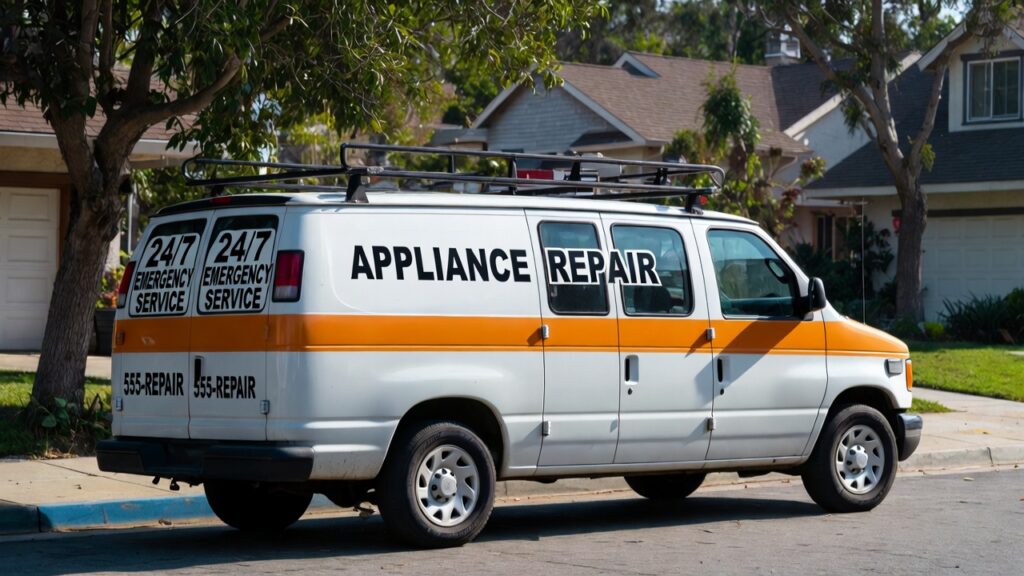
For years, your refrigerator runs smoothly, until one morning it’s simply… warm. Or halfway through a load, the dryer begins to screech. Because of the way appliances tend to operate, it always occurs at the worst possible moment. Finding reliable appliance repair services doesn’t have to be a nightmare for San Diego homeowners.Knowing who to call before things break is crucial when searching on Google at 11 p.m.
Refrigerators with warm areas, washers that stop mid-cycle and shake the entire laundry room, ovens that won’t ignite, and dishwashers that leave everything wet and streaky are just a few of the issues Blue Orca has been handling for households throughout San Diego and the neighboring counties. the typical suspects. Arriving with tools is only one aspect of a successful repair visit; the first step is the inspection. Before anyone touches a wrench, amp draw tests, safety inspections, and a true look at what’s truly wrong are all important. If you skip that stage, you’re just speculating, and speculation quickly becomes costly.
A technician who treats the symptom is not the same as one who addresses the root cause. A blocked filter or a malfunctioning pump could be the cause of a dishwasher that drains poorly. Two entirely different fixes for the same apparent issue. Because of this, proper appliance repair begins with a diagnostic rather than an assumption. The staff at Blue Orca explains what went wrong, how to solve it, and how long it will take in general; there are no ambiguous estimations or unexpected costs.
Front-load and top-load washers, stackable laundry units, refrigerators, ranges, cooktops, microwaves, trash disposals, and kitchen hoods are just a few of the many appliances that San Diego homes utilize on a daily basis. Both newer and older smart equipment eventually require maintenance, and not every problem calls for a new purchase. Many «dead» appliances only require a control board reset, thermostat recalibration, or replacement of a worn belt.
In the long run, this is where maintenance and repairs truly save money. It’s not glamorous, but cleaning airflow pathways, inspecting hoses for wear, testing thermostats, and repairing tiny parts before they completely fail all help to prevent larger malfunctions. A $150 repair might become a $900 replacement if maintenance is neglected long enough. Because manufacturers are aware of this, documented maintenance is frequently required under warranty terms.
People don’t appreciate how important same-day service is until they find themselves in a kitchen with rotting groceries. When a refrigerator breaks down on a Friday afternoon, it doesn’t wait for a Monday appointment. Businesses that base their scheduling on quick response—same day when feasible—are addressing a pressing issue rather than merely providing a nice-to-have.
Another item to consider when making a reservation is pricing clarity. Reliable, up-front expenses consistently outperform a «we’ll see once we’re there» strategy. When a business is operating well, local evaluations typically state the same things: they were competitively priced, arrived on schedule, provided a clear explanation of the issue, and refrained from trying to upsell a complete replacement for a problem that could be fixed.
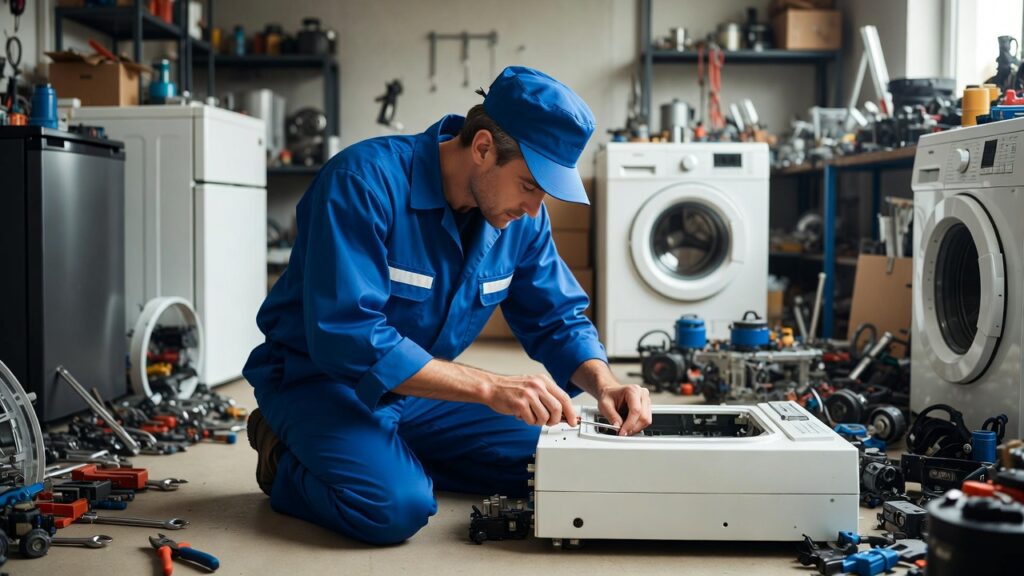
In the end, it usually makes more financial sense to repair rather than replace appliances because, even for higher-end models, fixing most appliance failures only costs a small portion of a new item. It’s also simply less wasteful. There are fewer appliances in landfills, and fewer resources are used to make replacements for machines that still had years of useful life.
Blue Orca provides both the immediate fix and the continuous maintenance that prevents the next call for anyone in San Diego who is now dealing with a broken appliance or simply wants to stay ahead of the next one.


